
A painting provider says it sends residential and commercial inquiries. Before choosing that provider, ask who makes the request, which work is included and who must approve the next step. The label alone does not tell you whether the inquiry fits the painting work your business accepts.
Compare the provider's answers with your own requirements. A request to repaint an owner's living room and a request to price shared hallways need separate notes, even though both involve a place where people live.
Check painting provider fit by role, not just property label
Ask the provider to separate the person requesting information from the person arranging access and the person approving work. One person can fill all three roles. Do not assume that they do, or that a different contact means the inquiry is unsuitable.
For a concrete operating reference, BEHR's property-owner and manager program describes site walks, specification services and project submittal packages. That shows an example of documentation used in managed-property painting. It does not establish the process for every project or the services included by a lead provider.
Ask which documents your prospective provider collects and which questions it leaves for your estimator. A contact who can arrange a visit has not necessarily approved the work.
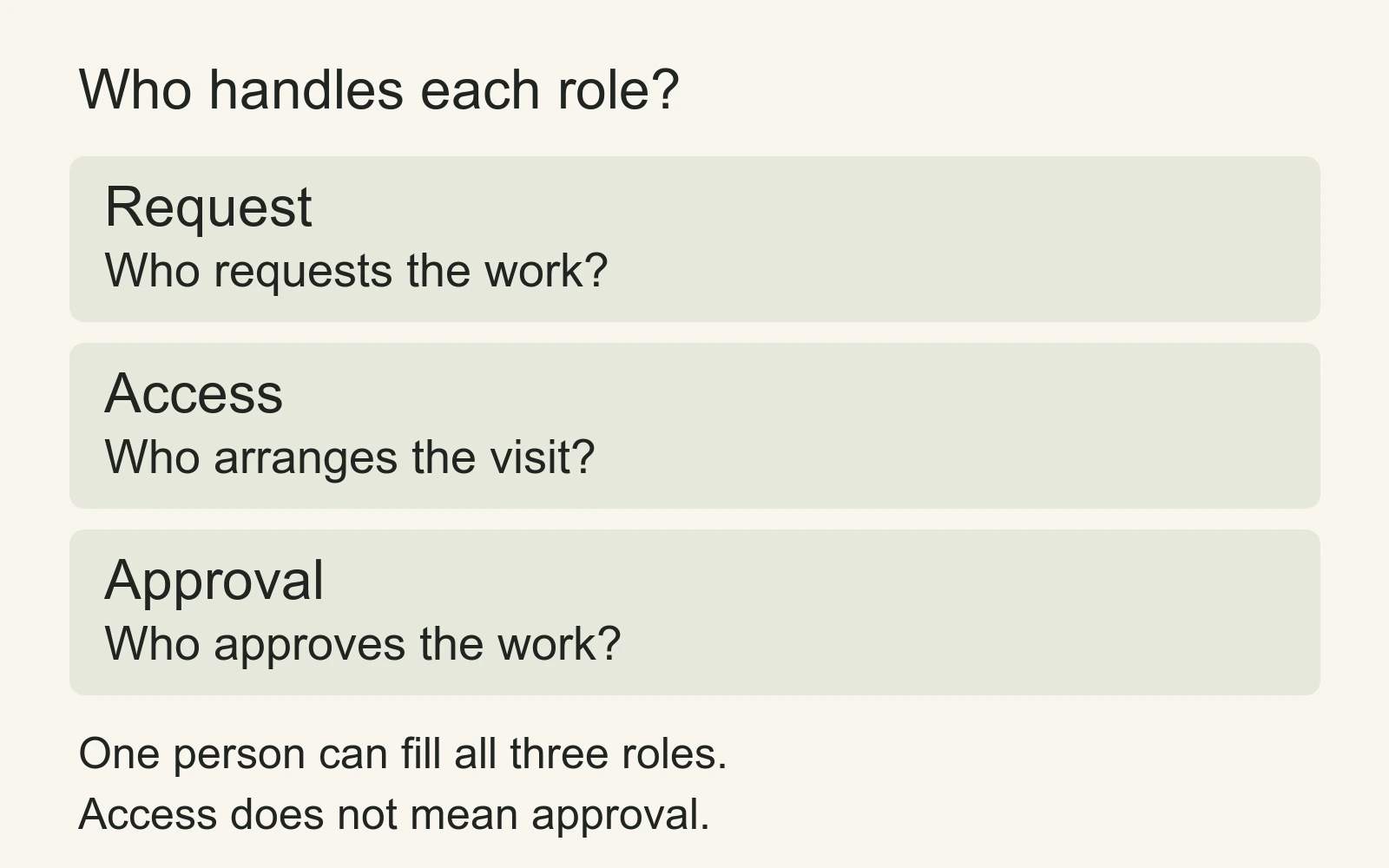
Who handles each role?
- Request: Who requests the painting work?
- Access: Who arranges access for the estimate visit?
- Approval: Who reviews the proposal and approves the work?
One person can fill all three roles. Access does not mean approval. Keep unanswered roles as open questions.
Give the provider your acceptance checklist
Write down the work your business accepts before reviewing the provider's categories. Use a separate row when the customer or approval process changes.
| Decision | Your requirement | Question for the provider |
|---|---|---|
| Requested work | Areas and surfaces your team accepts | What work did the requester actually name? |
| Customer role | Who your estimator needs to speak with | Is the contact requesting the work, arranging access or approving it? |
| Access | What must be arranged for the visit | Who can confirm access, and what is still open? |
| Approval path | What must happen after an estimate | Who reviews the proposal, and is that confirmed or assumed? |
| Work timing | Scheduling limits your team can support | Is the stated date a preference, a bid deadline or agreed work timing? |
| Missing information | Questions to resolve before accepting the inquiry | Who follows up, and where is the answer recorded? |
Treat an unanswered field as an open question. Do not turn a request for a proposal into approved work, or a preferred date into a crew commitment.
Compare two requests without guessing who can approve them
This is a fictional buying exercise, not a customer record or a ServiceConsulting result.
| Request | What is known | What to establish before calling it a fit |
|---|---|---|
| A homeowner requests living-room wall painting | The requested room and surface are named | Who will attend the estimate, arrange access and approve the proposed work? |
| A property manager requests hallway painting for a residential building | The request concerns shared hallways, not a single home's rooms | Which areas are included, who reviews the proposal and what documents must accompany it? |
Suppose your business accepts owner-requested room repaints but has not agreed to price managed-building projects. The second inquiry does not become a fit merely because the provider calls the building residential. Ask the provider to apply your actual acceptance criteria and explain how it handles requests outside them.
This is a question about matching requests to your business. It does not establish a provider's refund, replacement or billing terms. Check those separately in the agreement.
Ask for evidence that matches the work you want
Once the provider explains its categories, ask for appropriately redacted examples that show the requested work and contact roles. A total labeled painting inquiries does not answer which customer situations it contains.
Use the painting results evidence checklist to check the records behind a provider's claims. When an inquiry fits, the painting project brief helps carry the requested areas and unanswered questions into the estimate.
Before your next provider conversation, complete one acceptance checklist for the painting work you want. Compare the provider's actual intake fields with it and name the questions that still need answers.