
If your painting estimate request says only “paint the house,” start by recording which areas and surfaces the homeowner wants included. A useful painting lead brief separates what the homeowner said, what remains unclear and who will check it before the estimate. It is a record of the request, not a finished scope of work.
Keep that brief with the appointment. Your estimator should be able to see the requested work and the unanswered questions together.
Start the painting lead brief with the work area
Ask whether the request is for interior work, exterior work or both. Then name the areas separately. “Living room walls” says more than “inside.” “Front exterior trim” says more than “outside.”
Avoid turning one answer into a larger job. If the homeowner mentions walls, do not silently add ceilings, doors or trim. If they mention exterior work, ask which parts they mean. Keep additional areas marked as questions until the homeowner confirms them.
Record the homeowner's description of the current surface beside the request. Their description can help prepare the visit, but it does not establish the preparation, materials or repair work the contractor will recommend. Leave those decisions for the appropriate assessment.
Use a brief the estimator can scan
Use one record per inquiry, with separate lines for distinct work areas:
| Part of the brief | What to record | What stays open |
|---|---|---|
| Requested area | Named rooms or exterior areas | Areas described only as “the house” |
| Requested surfaces | Walls, ceilings, trim or other surfaces actually named | Anything the homeowner has not included |
| Current condition | The homeowner's own description | Contractor assessment and preparation needed |
| Location and access | Address and arrangements needed for the visit | Unconfirmed access or person attending |
| Timing | Preferred estimate window and desired work timing, separately | An installation or work date the contractor has not agreed to |
| Reference material | Photos or notes connected to a named area | Images whose location or relevance is unclear |
| Next check | Missing information, owner and next action | Questions that have not been answered |
Keep requested timing separate from accepted timing. “Before we move in” is a preference to discuss. It is not a promise that the crew can meet that date.
Work through an unclear request
This is a fictional example for using the brief, not a customer record or a result.
The starting note says: “Paint downstairs and maybe the outside.” That leaves two different scope questions. Write them separately:
| Starting note | Follow-up question | Brief after the fictional reply |
|---|---|---|
| Paint downstairs | Which rooms and which surfaces? | Living room and hallway walls requested; ceilings and trim not yet discussed |
| Maybe the outside | Which exterior areas should the estimator look at? | Front door and surrounding trim requested; other exterior areas not included in the current request |
| Before moving in | Is that the desired work date or the preferred estimate date? | Desired work timing recorded; estimate window still to arrange |
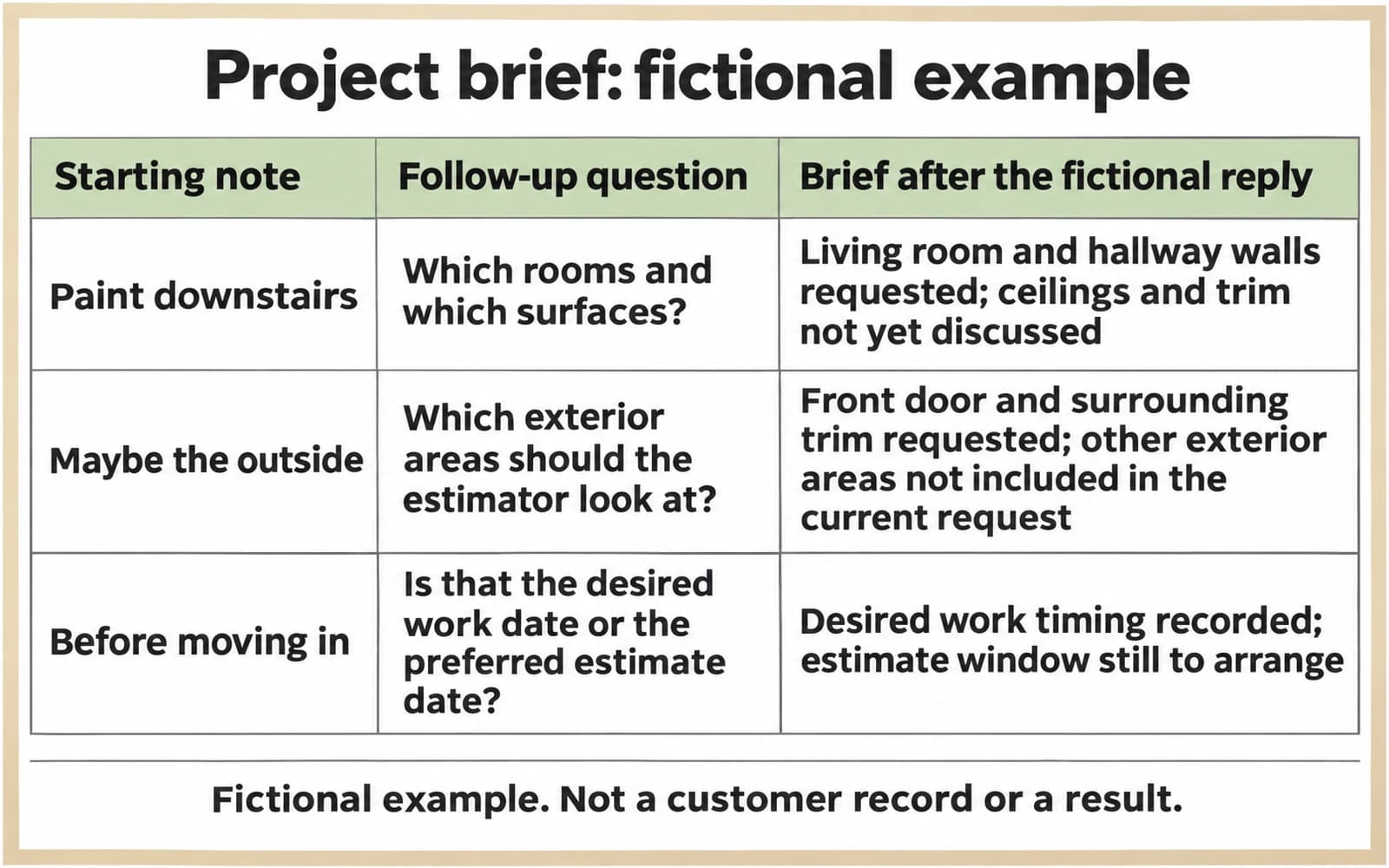
The reply makes the request more specific without inventing a final quote. Keep the original note and add the clarification so the estimator can see how the scope changed. Ask about the unresolved ceilings and trim instead of filling them in.
Keep photos attached to the right question
A photo is useful only when the estimator knows which part of the request it shows. Label it with the room or exterior area. If a picture shows a doorway but the brief asks about hallway walls, ask how it relates to the requested work.
Keep the brief usable when photos are unavailable. Mark that fact and let the estimator decide what needs checking at the visit. A photograph does not replace the contractor's assessment or establish a final preparation method.
Check the brief before handing over the appointment
Read the request from the estimator's point of view. Can they identify the work area, the surfaces requested, the access arrangements and the questions still open? Name the person responsible for each missing detail.
Keep the project brief separate from a provider's performance claims. Use the painting lead evidence checklist when checking what a provider's reported results actually establish. Use the appointment definitions when discussing which event an offer counts.
For your next painting lead brief, start with one vague inquiry. Name the work areas, separate confirmed requests from open questions and attach the brief to the estimate record before handing it over.