
Roofing lead qualification starts by checking what the homeowner wants, whether the property and project fit your business, and what the visit is meant to accomplish. Record those answers before booking an estimate. A report of damage, a request for an inspection and a request for a replacement price are different starting points.
For a roofing owner, the useful question is not simply whether a lead is “good.” It is whether you have enough information to arrange the right next step without promising work your team has not assessed.
Start with the homeowner's requested work
Ask: “What would you like someone to look at, and what are you hoping to do next?” Keep the answer in the homeowner's words before assigning a project category.
Someone may want a leak investigated, a repair price, an assessment of roof condition or a full replacement estimate. If the answer is unclear, record it as unclear. Do not turn a symptom into a replacement request to make it fit your calendar.
A leak alone does not establish that a roof needs complete replacement. The National Roofing Contractors Association makes that distinction in its roof maintenance guidance. The intake conversation should establish the requested visit; the roofing professional assesses the actual work.
Keep separate notes for what the homeowner reports and what your team has verified. “Homeowner reports a leak” is useful. “Roof needs replacement” requires a different basis.
Match the request to your actual scope
Write down which projects your business wants before reviewing inquiries. Include property type, requested work and the area your team can serve.
Then ask:
- What is the property address?
- Is this a residential property or another property type?
- Is the request for assessment, repair or replacement pricing?
- Who is arranging the visit, and what is their role in deciding on the work?
- Does the requested visit fit the work and area your team has agreed to cover?
A mismatch does not mean the homeowner's request is unreasonable. It means it belongs in a different service conversation. Keep that distinction visible instead of booking every roofing inquiry into a replacement-estimate slot.
ServiceConsulting's roofing appointment scope is full residential roof replacement, with repairs outside that scope. That is a service boundary, not a diagnosis of an individual roof. The checklist here is a suggested tool for your own intake process, not a promise that ServiceConsulting checks every field.
Separate an inspection request from an estimate request
Clarify what the homeowner expects to receive from the visit.
“Tell me what is wrong” asks for an assessment. “Price a replacement” asks for a proposal. A visit may involve both, but the person booking it should not silently substitute one for the other.
Ask these follow-up questions when needed:
- Are you looking for an assessment of the roof, a price for work you already want, or both?
- Has anyone assessed it already? If so, what did they tell you?
- What would make this visit useful to you?
Record a previous assessment as something the homeowner reported unless your team has reviewed its supporting record. Do not promise a replacement recommendation, insurance outcome or final price during qualification.
Use a roofing lead qualification checklist
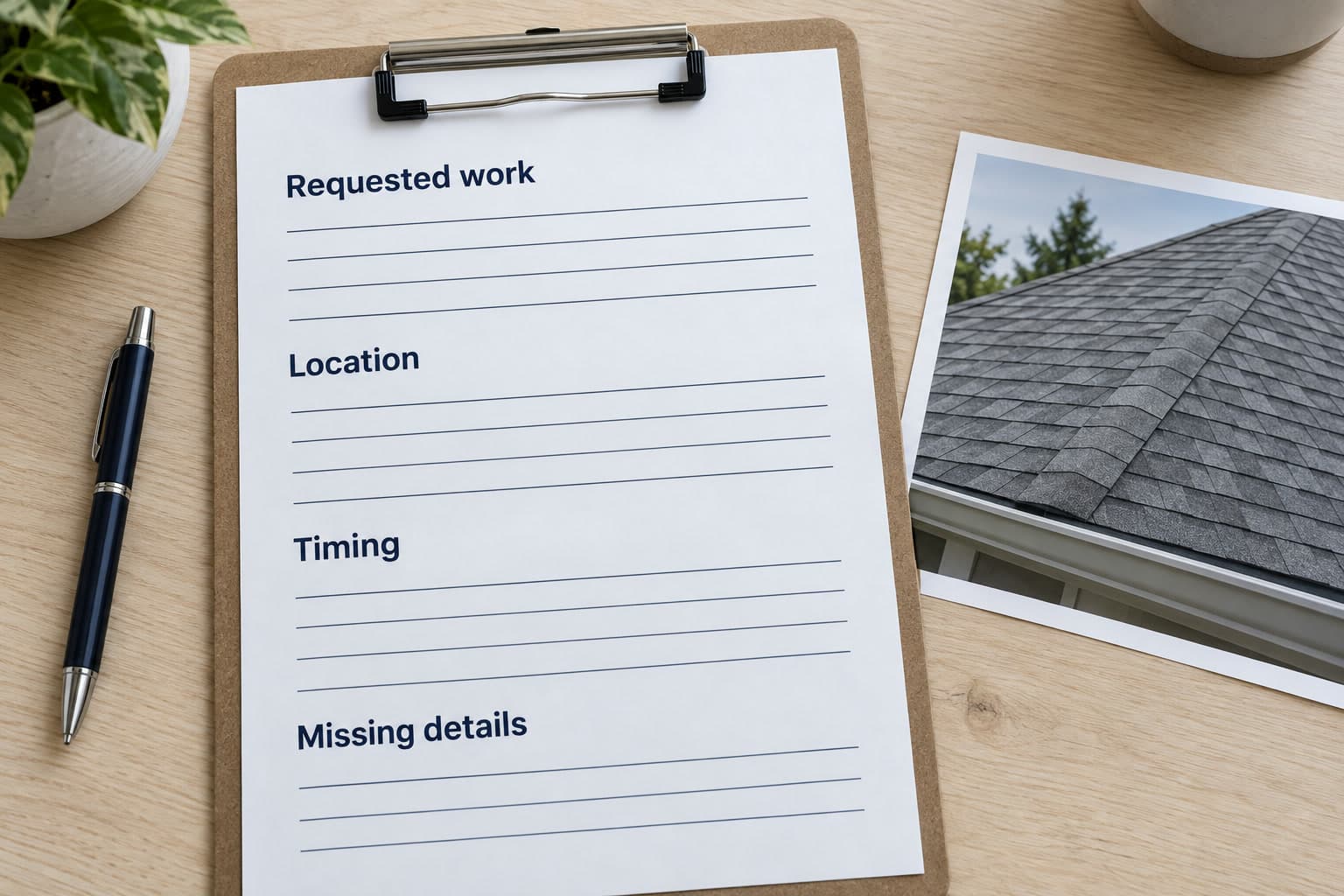
Copy these fields into your intake notes. Beside each answer, record its source and anything still missing.
- Requested work: What did the homeowner ask for, in their own words?
- Property and location: What type of property is it, and has your team checked the address against its service area?
- Contact role: Who is arranging the visit, and who needs to take part in the project decision?
- Reported concern: What has the homeowner noticed? Keep observations separate from a diagnosis.
- Visit purpose: Is the next step an assessment, repair discussion or replacement estimate?
- Timing: When does the homeowner want the visit? Is that a preference or a date they have agreed to?
- Access: Who will meet the estimator, and what access arrangements need confirmation?
- Open question: What must be clarified before the visit is booked?
Use explicit notes such as “homeowner reported,” “checked against our service area” and “not yet confirmed.” A blank field cannot tell the next person whether nobody asked or nobody knows.
Keep a preferred time separate from a booking
A homeowner saying that afternoons are convenient has supplied a preference. Record a booking only after a specific appointment window is agreed. Make sure the homeowner and estimator have the same understanding of the visit's purpose.
The ServiceConsulting appointment process explains the service's booking steps. Use that alongside the applicable agreement when deciding who owns scheduling and changes.
Choose the next step from the missing information
End intake with a clear action:
- Ready to arrange the visit: The requested work fits, the visit purpose is understood and the practical details are available.
- Needs clarification: One missing answer prevents a sensible booking. Name the question and who will resolve it.
- Outside the agreed scope: The request calls for work your appointment service does not cover. Keep it out of that appointment category.
These are suggested routing decisions, not a prediction of whether the homeowner will buy. Someone can genuinely request a replacement estimate and still compare proposals or decide not to proceed.
Use the checklist on your next estimate request. The goal is a record that lets your team explain what the homeowner asked for, why the visit fits and what remains to be confirmed before anyone heads to the property.